
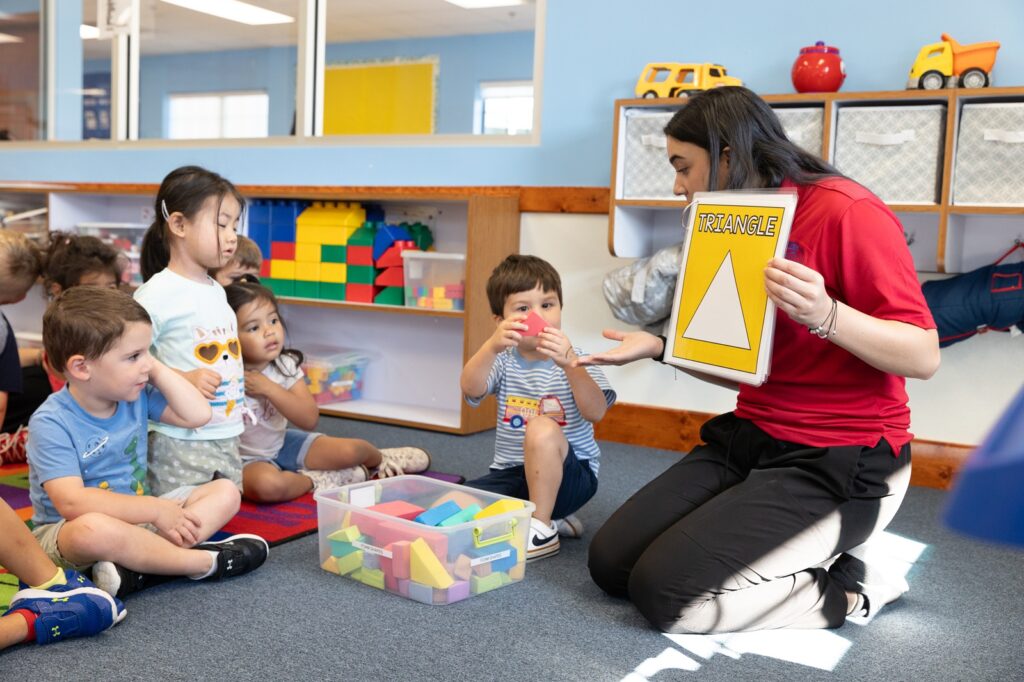
Every year, a new group of children ages into preschool, and their families start looking for care they can trust. That steady need is why early childhood education business ideas draw so many first-time owners and investors. This guide walks through the main models, what each one costs, and how to decide between building on your own or joining a proven franchise.
Key Takeaways
- The U.S. child care market was about $65.15 billion in 2024 and may reach $109.88 billion by 2033 (Grand View Research).
- As of 2025, about 46% of children under age six live in a licensed child care desert, leaving room for new programs.
- Business models vary, from in-home daycare and enrichment programs to full-service centers and preschool franchises, each with its own cost and risk.
- Franchising gives new owners a proven model plus curriculum, real estate, training, and marketing support, which shortens the path to opening.
- With Ivy Kids, the initial franchise fee is $125,000. Support covers real estate and construction, training, operations, marketing, MultiPrep curriculum, and Brain Bites nutrition.
What Makes Early Childhood Education a Strong Business Opportunity
Early childhood education is a strong business opportunity because demand is both steady and underserved. Families need care year after year, and many neighborhoods still lack enough licensed seats to go around.
The market is large and still growing. According to Grand View Research, the U.S. child care market size was estimated at USD 65.15 billion in 2024 and is projected to reach USD 109.88 billion by 2033, growing at a CAGR of 6.02% from 2025 to 2033.
Supply has not caught up with demand. The Center for American Progress reports that, as of 2025, an estimated 46 percent of children under age six still live in a licensed child care desert, an area with more than three young children for every licensed slot.
Families also keep paying because they must. Care.com’s 2026 Cost of Care Report found that the average parent reports spending 20% of their annual income on child care, and that 78% of parents spend 10% or more.
Workforce trends add to the pull. Federal labor force participation data shows that in 2025, 68.0 percent of mothers with children under age 6 participated in the labor force, and those working parents need dependable care.
Early Childhood Education Business Ideas to Consider
These models differ mainly by their size and by how much support stands behind them. They range from fully independent to fully supported.
In-Home Daycare (Family Child Care)
An in-home daycare, also called family child care, means caring for a small group of children in your own home. It carries the lowest startup cost of any model here, though you still need state licensing and must meet child-to-staff ratios. This path fits solo operators who want to start small.
Full-Service Early Learning Center
A full-service early learning center needs more space and staff than an in-home daycare. It serves infants through pre-K, often with before- and after-care plus summer programs. It costs more to run, yet it opens up more revenue streams and a bigger community presence.
A defined team keeps it running, with a center director and an education director guiding lead and assistant teachers. A multi-program center that offers infant and toddler care, pre-K, after-school, enrichment, and summer camp can earn revenue year round.
Enrichment, Before- and After-School, and Specialty Programs
If a full center feels like too much at once, enrichment and specialty programs offer a smaller entry. These are focused niches, such as tutoring, STEM classes, music, or before- and after-school care. They carry lower overhead than a full center, and you can layer them onto a program you already run.
Early Childhood Education Franchise
Any of these can be built independently, or you can buy into a ready-made franchise system. An early childhood education franchise lets you license a proven brand and its operating system, with the curriculum and support included.
For a first-time owner, that structure removes much of the guesswork of starting from zero. If this path interests you, take a closer look at the Ivy Kids franchise opportunity.
Independent Center vs. Franchise: How to Choose
Both paths can work, but the right choice depends on how much support you want and how fast you hope to open. A franchise adds fees and structure. In return, you receive a curriculum and a real-estate and training process that leaves you ready for learning on day one.
The franchise sector keeps expanding, too. In the International Franchise Association’s 2026 Franchising Economic Outlook, child services and commercial and residential services are expected to be the fastest growing industries at a year-over-year rate of 3.2%. That creates a real opportunity for aspiring business owners.
That 3.2% rate covers a combined child-services-and-commercial/residential category, not child services alone. Still, the direction points toward steady owner demand. To see whether this fits you, review the traits of ideal franchise candidates.
| Factor | Independent Center | Franchise |
| Brand recognition | Built from scratch over time | Established name from day one |
| Curriculum | You design or buy it | Proven curriculum included (MultiPrep) |
| Real estate and site selection | On your own | Demographic studies and site help provided |
| Training | Self-directed | Structured corporate and on-site training |
| Marketing | You plan and fund it | Strategic plan and campaign support |
| Upfront cost | Often lower to start | Franchise fee plus buildout |
| Ongoing fees | None to a franchisor | Royalty and advertising fees |
| Speed to open | Slower, more trial and error | Faster with a proven system |
| Risk | Higher, less guidance | Lower, backed by support |
Dick Ren, Franchise Development Director at Ivy Kids, puts it plainly. “A franchise trades a monthly fee for a shortcut through the hardest parts of opening. You get MultiPrep, our proven curriculum, plus site-selection help from a team that has run its own centers for more than 20 + years.”
What Sets a Strong Early Learning Program Apart
Families choose (and pay for) programs that stand out on learning and on care for the whole child.
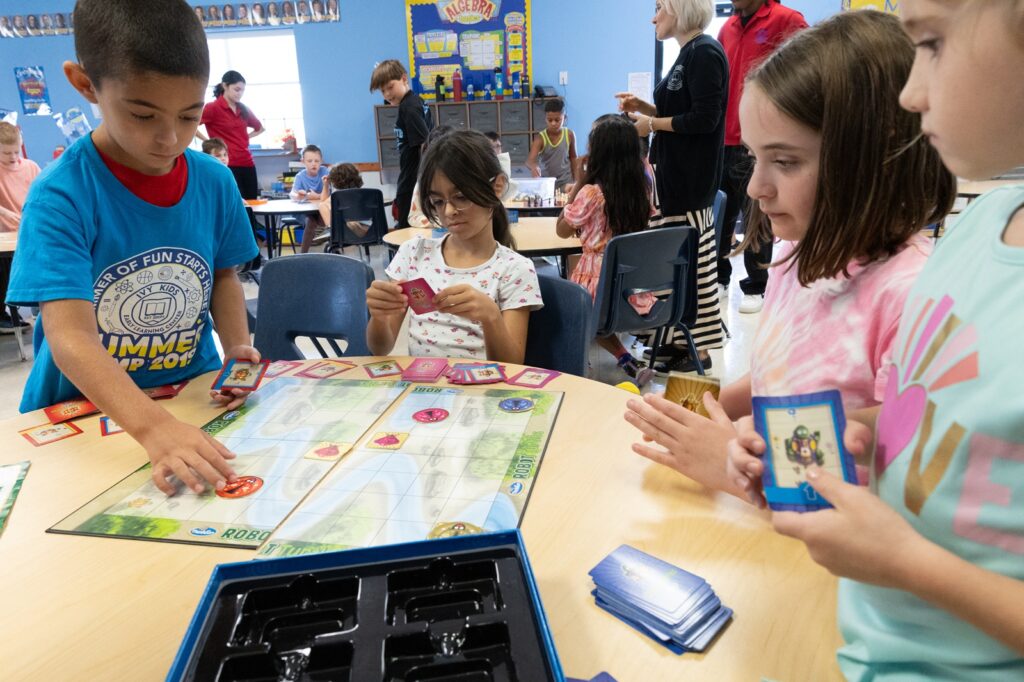
Emily Laim, Director of Education at Ivy Kids, sees it every day: “Parents can tell within one tour whether a center was built around their child or around the balance sheet. Our MultiPrep lessons, our Brain Bites meals, our safety systems, and our teachers are why families stay enrolled year after year.”
Curriculum That Fits How Children Learn
Children learn in different ways. A strong curriculum meets each of them where they are. Our MultiPrep curriculum draws on Harvard professor Howard Gardner’s theory of eight intelligences, such as linguistic, logical, musical, and kinesthetic. It gives teachers more than one path to reach a child.
Nutrition as Part of the Day
What children eat shapes how they learn and feel. Through the Brain Bites nutrition program, each center serves 100% fresh meals and snacks prepared on premises by a certified chef. The cost is built into tuition, so parents do not pack food or pay extra.
Safety and Security First
Safety is the first thing parents ask about. It’s also Ivy Kids’ number one priority. Every center includes full-day webcam monitoring for parents, auto-lock doors and gates, touchscreen check-in, and controlled entry. Staff are trained in CPR and first aid, and managers run continual walkthroughs.
What It Costs to Start and the Support Behind It
Costs vary widely by model. An independent center can start small and scale up over time, while a full-build franchise is a larger commitment from the outset.
Ivy Kids publishes its numbers so you can plan with real figures. According to Ivy Kids’ 2026 Franchise Disclosure Document (FDD), the initial franchise fee is $125,000, and qualifying veterans receive a $30,000 VetFran discount.
Ivy Kids’ 2026 FDD also lists a royalty of 7% of Gross Sales and an advertising obligation of 1.5% of Gross Sales. For the total investment, the same 2026 FDD estimates $1,102,000–$1,540,500 for the Long-Term Lease Program. The Land Ownership and Build Program is estimated at $5,500,000–$6,790,000.
The lease program offers a lower-burden entry path for most first-time owners. Those fees buy support that lowers your risk, since Ivy Kids provides franchisee training and support, plus help with site selection and marketing.
You can review the full ranges on the Ivy Kids investment and costs page. From there, you can also explore financing options before you commit.
Staffing demand stays strong too. According to the Bureau of Labor Statistics, employment of preschool teachers is projected to grow 4 percent from 2025 to 2035, with about 66,700 openings projected each year.
Frequently Asked Questions
Is an early childhood education business profitable?
It can be, since tuition is recurring and one center can run several programs at once. Profitability depends on your enrollment and the model you run.
How much does an early childhood education franchise cost to open?
Costs range widely by model, from tens of thousands for an in-home daycare to seven figures for a full-build center. According to Ivy Kids’ 2026 FDD, the franchise fee is $125,000, with total investment estimated at $1,102,000–$1,540,500 for the lease program.
Do I need an education degree to own one?
No. Owners often run the business side while a credentialed director meets state licensing rules, and a franchisor like Ivy Kids trains you on operations.
Should I open a franchise or independent child care center as a first-time owner?
A franchise makes sense when you want proven systems and can meet the capital requirement. An independent center gives you more control but far less guidance.
What licensing is required?
Licensing is set state by state and usually covers staff-to-child ratios, background checks, facility standards, and health rules. Your franchisor can guide you through the local requirements.
Bringing Early Learning to Your Community
There are many early childhood education business ideas, but the right one depends on how much you want to build yourself. A supported franchise path lets you spend your energy on children and families while experts handle the buildout, licensing, and marketing behind the scenes.
Ivy Kids brings more than 20 years of operating experience to owners who want to make that kind of impact in their community. If you are ready to explore the opportunity, Contact us today.